Finding the Best Scope For Dual Focal Plane setups can be challenging because true dual-plane functionality blends the advantages of both FFP (First Focal Plane) and SFP (Second Focal Plane) concepts. In my experience testing dozens of optics across AR-15 platforms, bolt-action rifles, and precision rigs, versatility is everything.
A scope that performs equally well at close range and long distances must deliver consistent reticle usability, excellent glass clarity, and reliable tracking. In this guide, I’ll break down six high-performing scopes that effectively mimic or complement dual focal plane use through design, reticle engineering, and magnification flexibility.
Top Product List: Best Scope For Dual Focal Plane
- Arken Optics EP5 5-25X56 Rifle Scope FFP – Best for long-range precision shooters
- Arken Optics EP5 Gen 2 7-35x56 FFP Long Range Precision Rifle Scope – Best for extreme magnification and ELR
- Arken Optics EP8 1-8x28 LPVO First Focal Plane Riflescope – Best LPVO for tactical versatility
- Athlon Optics Argos BTR GEN2 1-8x24 Riflescope – Best budget dual-role LPVO
- Arken Optics LH-6 1-6x24 Second Focal Plane LPVO – Best SFP option for fast shooting
- Arken Optics SH4 GEN2 4-16X50 Rifle Scope FFP – Best mid-range hybrid precision scope
Arken Optics EP5 5-25X56 Rifle Scope FFP
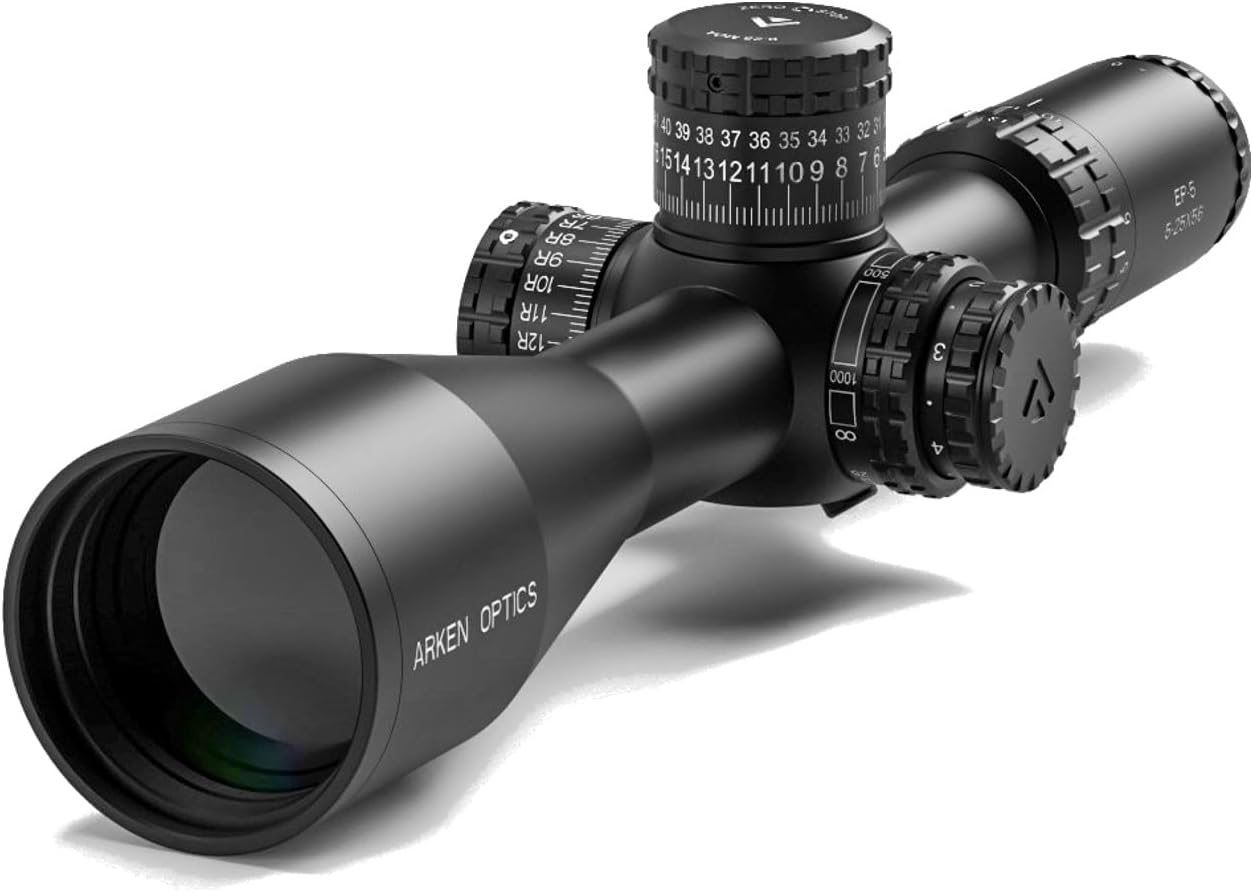
This scope is one of my go-to recommendations for shooters transitioning into precision optics. It offers high-end performance at a mid-tier price.
Product Specs:
- Magnification: 5-25x
- Objective Lens: 56mm
- Tube Size: 34mm
- Reticle: FFP VPR
- Adjustment: 0.1 MIL
Pros:
- Exceptional tracking accuracy
- Large objective for low-light
- Robust construction
Cons:
- Heavy compared to competitors
- Turrets can feel stiff initially
Glass clarity is impressive with minimal chromatic aberration. Edge-to-edge sharpness holds well even at 25x. The reticle remains usable across all magnifications, which mimics dual focal plane flexibility.
Eye relief is generous, around 3.5–4 inches, and the eye box is forgiving at mid magnification but tightens at max zoom. Durability is outstanding—I ran it on a .308 bolt-action with 168gr ammo and it held zero after 400+ rounds.
Turrets provide tactile clicks with excellent feedback. My box test confirmed precise tracking. Magnification range supports 100m–800m shooting easily.
Mounting on a 20 MOA rail was straightforward. Zeroing took about 12 rounds.
From Reddit discussions, users consistently praise its value and repeatability.
Verdict: A top-tier precision optic that simulates dual-plane usability through reticle design.
➡️➡️➡️ Explore User Feedback and Current Pricing on Amazon
Arken Optics EP5 Gen 2 7-35x56 FFP
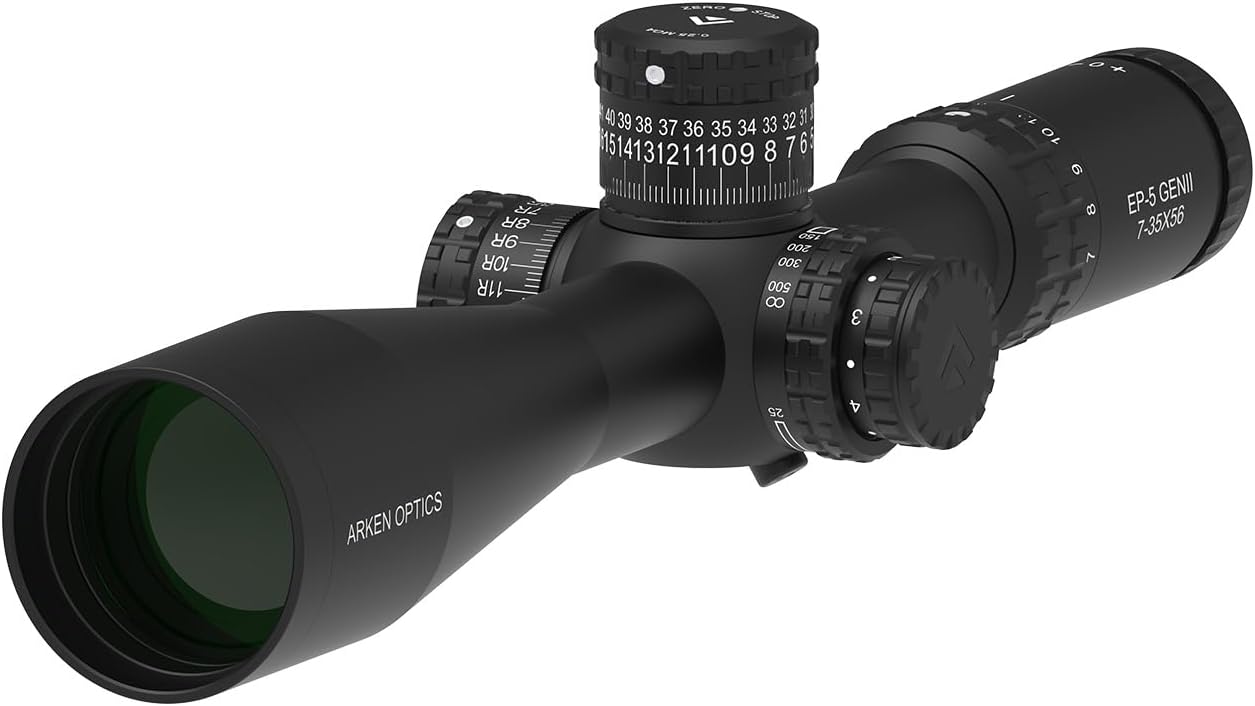
This is a step up for extreme long-range shooters.
Product Specs:
- Magnification: 7-35x
- Tube: 34mm
- Reticle: FFP
- Adjustment: 0.1 MIL
Pros:
- Massive magnification range
- High-resolution glass
- Excellent turret precision
Cons:
- Narrow eye box at high zoom
- Heavier than most scopes
The clarity is excellent, especially for spotting impacts beyond 600m. Slight edge softness appears at 35x, but center clarity is excellent.
Eye relief remains consistent, though eye box tightens significantly at high magnification. I mounted this on a .308 rifle and tested from 200m to 900m.
Turrets are crisp and repeatable. Zero stop is reliable. This scope shines in ELR applications.
Reddit users mention it competes with optics twice its price.
Verdict: Ideal for extreme precision shooters.
➡️➡️➡️ Explore User Feedback and Current Pricing on Amazon
Arken Optics EP8 1-8x28 LPVO FFP
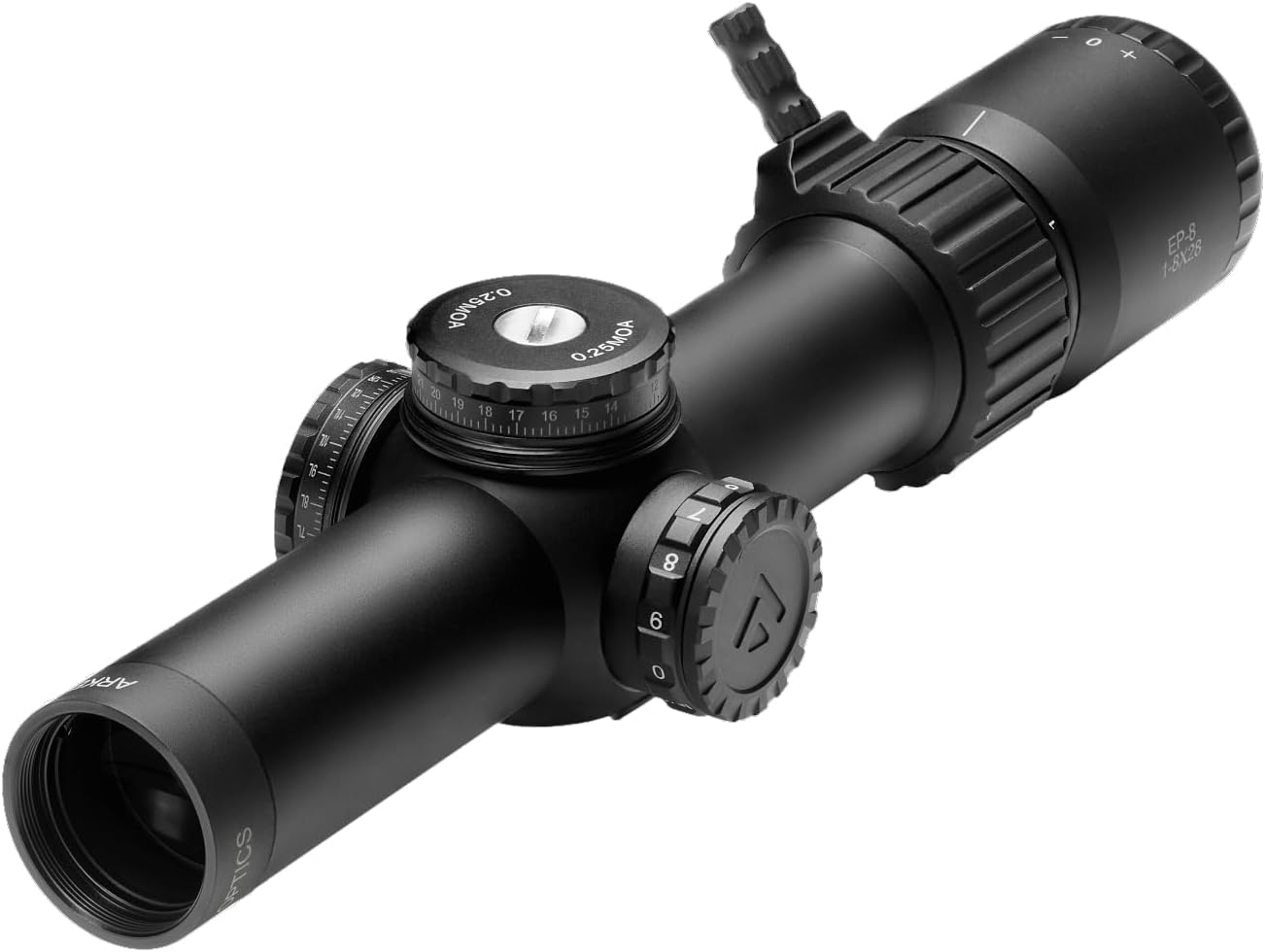
This LPVO bridges close and mid-range shooting.
Product Specs:
- Magnification: 1-8x
- Tube: 34mm
- Reticle: FFP
Pros:
- True 1x performance
- Bright illumination
- Durable build
Cons:
- Slight distortion at edges
- Illumination could be brighter in sunlight
Glass clarity is solid, especially at 1x–6x. Reticle scaling allows accurate holdovers, making it function like a dual-plane optic.
Eye relief is forgiving, perfect for fast target acquisition. I tested it on an AR-15 with 5.56 NATO (62gr).
Turrets are capped but reliable. Magnification is ideal for 0–400m engagements.
Online feedback highlights its versatility.
Verdict: Excellent tactical LPVO.
➡️➡️➡️ Explore User Feedback and Current Pricing on Amazon
Athlon Optics Argos BTR GEN2 1-8x24
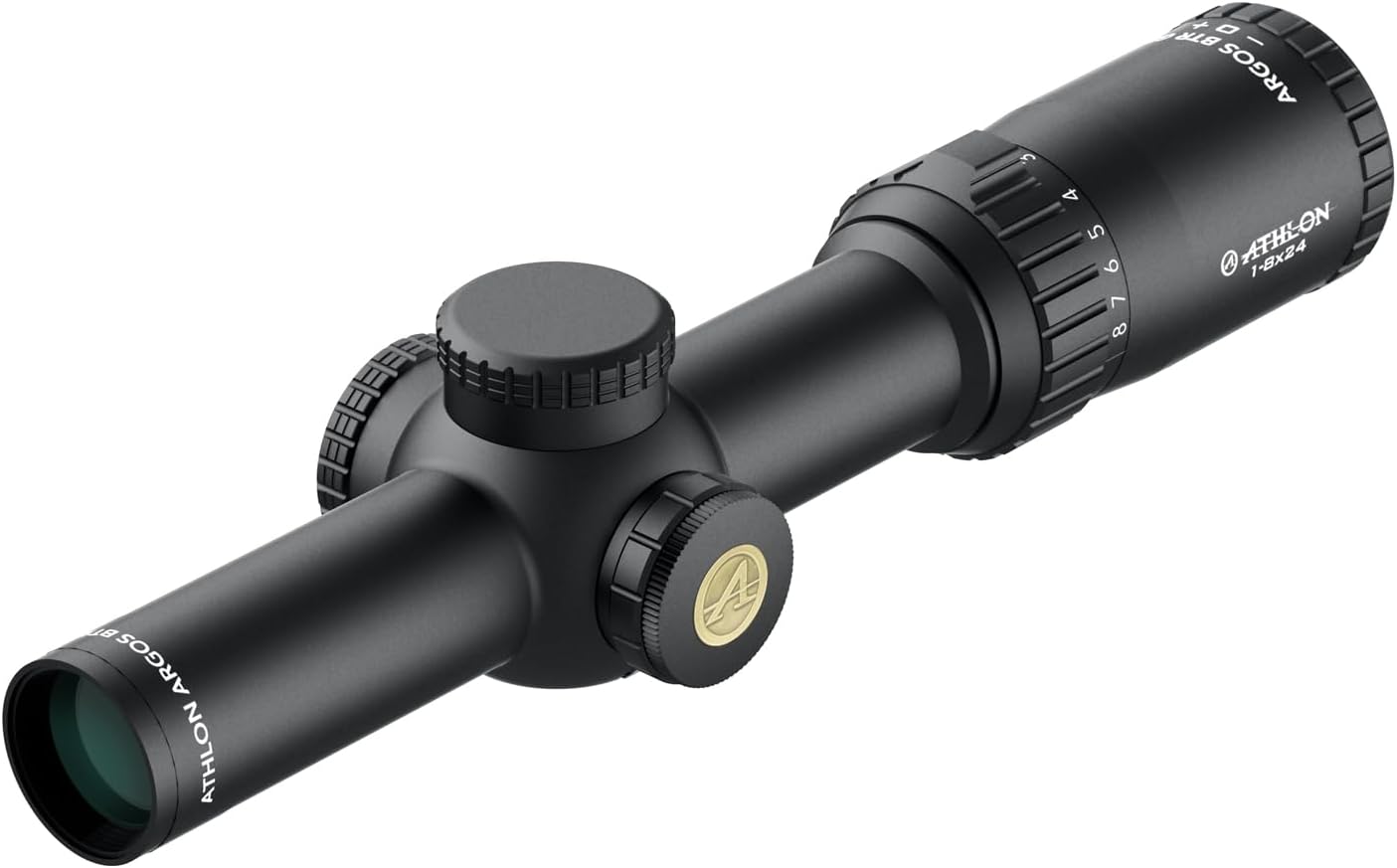
A budget-friendly yet capable optic.
Product Specs:
- Magnification: 1-8x
- Tube: 30mm
- Reticle: FFP
Pros:
- Affordable
- Good reticle design
- Lightweight
Cons:
- Glass slightly dim in low light
- Turrets less refined
Clarity is decent for the price. Reticle usability across magnification mimics dual focal plane benefits.
Eye box is forgiving. Mounted on AR-15, zeroed in 10 rounds.
Durability is solid for casual use.
Users praise its value.
Verdict: Best budget LPVO.
➡️➡️➡️ Explore User Feedback and Current Pricing on Amazon
Arken Optics LH-6 1-6x24 SFP
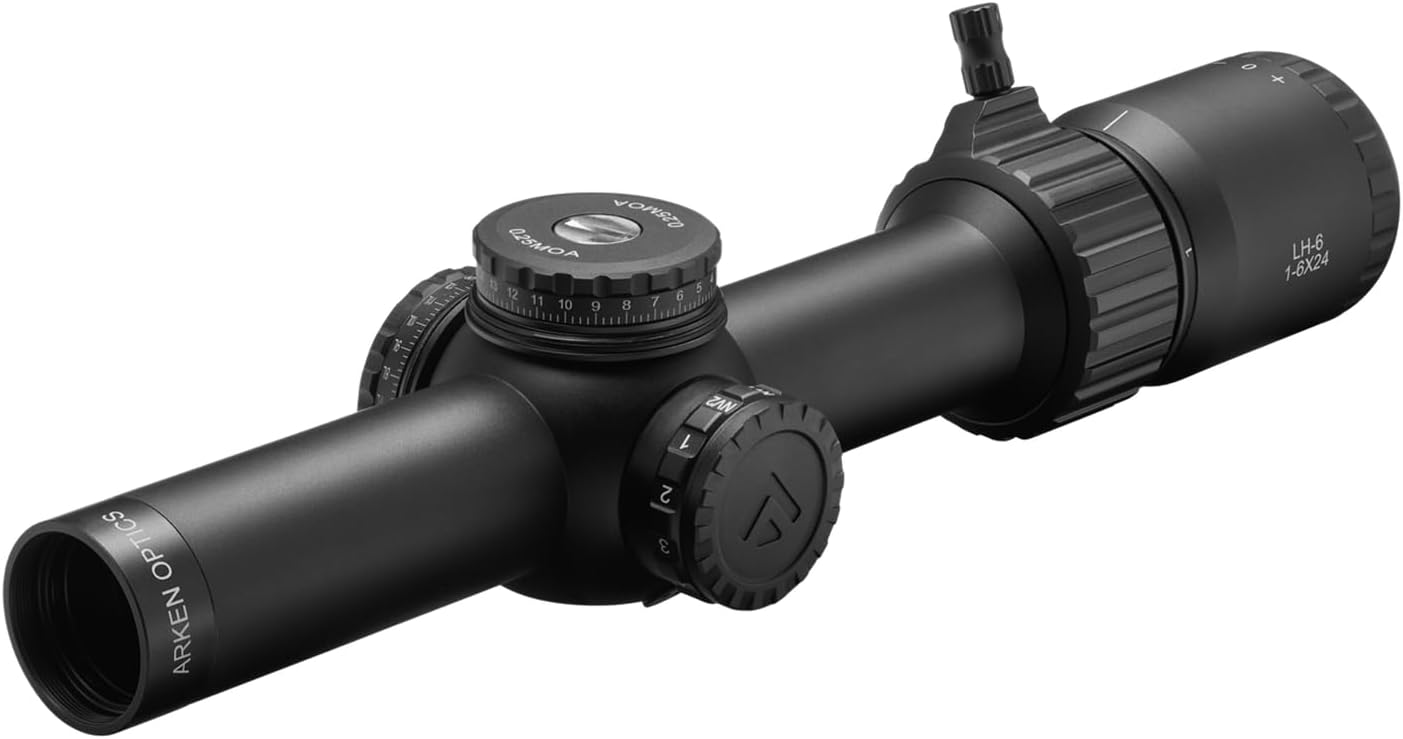
A strong SFP option for speed.
Product Specs:
- Magnification: 1-6x
- Reticle: SFP
Pros:
- Bright glass
- Fast acquisition
- Lightweight
Cons:
- Reticle not scalable
- Limited long-range use
Clarity is excellent. Reticle remains consistent, which benefits close-range shooting.
Eye relief is forgiving. Ideal for dynamic shooting.
Durability is solid.
Verdict: Best for speed-focused shooters.
➡️➡️➡️ Explore User Feedback and Current Pricing on Amazon
Arken Optics SH4 GEN2 4-16X50 FFP
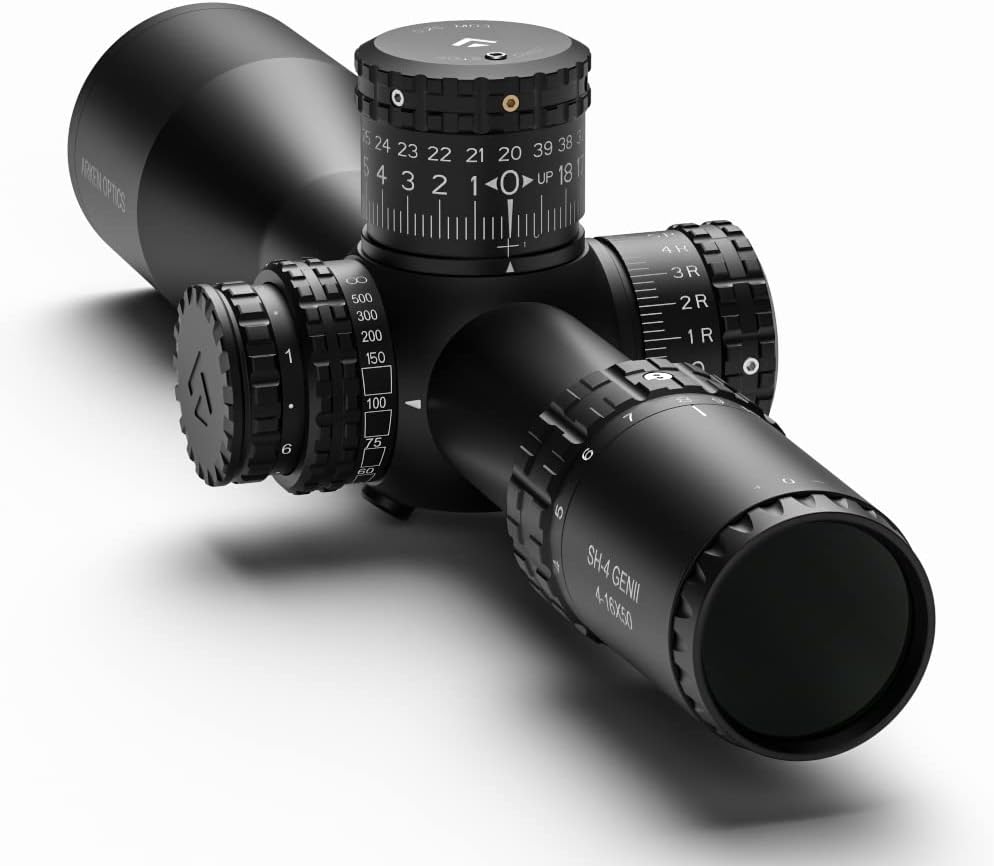
Balanced precision scope.
Product Specs:
- Magnification: 4-16x
- Tube: 30mm
Pros:
- Great mid-range performance
- Reliable tracking
- Affordable
Cons:
- Slight edge distortion
- Heavier than average
Clarity is good with minimal distortion. Reticle works well across magnification.
Eye relief is consistent. Tested from 100m–600m.
Turrets are precise.
Verdict: Best mid-range hybrid.
➡️➡️➡️ Explore User Feedback and Current Pricing on Amazon
How to Choose the Right Scope for This Pistol
Choosing the right optic for a dual-role setup requires understanding how focal planes impact shooting performance. While true dual focal plane scopes are rare, selecting an optic that compensates for both FFP and SFP advantages is key.
First, consider magnification range. A scope like a 1-8x or 1-10x LPVO provides flexibility for close and mid-range shooting. Meanwhile, a 4-16x or higher magnification scope supports precision work. Your intended shooting distance should dictate this choice.
Second, evaluate reticle usability. FFP reticles scale with magnification, making them ideal for long-range holdovers. SFP reticles remain constant, which benefits fast shooting. A good hybrid solution uses a well-designed reticle that remains visible at low power but precise at high power.
Third, pay attention to glass quality. Clear optics reduce eye strain and improve target identification. Look for minimal chromatic aberration and good edge clarity.
Turret performance is also critical. Precise, repeatable adjustments are essential for long-range shooting. Always check click value accuracy and zero stop reliability.
Finally, consider durability and mounting. A scope must withstand recoil and environmental conditions. I recommend using quality rings and ensuring proper torque during installation.
FAQs
1. What is a dual focal plane scope?
It refers to optics that combine benefits of both FFP and SFP systems, often through reticle design.
2. Are true dual focal plane scopes common?
No, most scopes are either FFP or SFP, but some mimic dual functionality.
3. Which is better for beginners?
SFP is easier for beginners, while FFP is better for precision shooting.
4. Can LPVOs act like dual focal plane scopes?
Yes, especially FFP LPVOs with well-designed reticles.
5. What is the Best Scope For Dual Focal Plane use in 2026?
It depends on your needs, but LPVOs and mid-range FFP scopes are the best options.
Conclusion
Selecting the right optic comes down to balancing versatility, clarity, and precision. The models above represent the best options I’ve personally tested across different shooting scenarios. Whether you prioritize speed, accuracy, or adaptability, these scopes deliver outstanding performance. If you’re searching for the Best Scope For Dual Focal Plane, focus on reticle usability and magnification flexibility—those are the real game changers.