Choosing the Best Scope For First Rifle can feel overwhelming, especially when you're just getting into target shooting and want something affordable but reliable. I’ve spent years testing entry-level optics on platforms like a .22 LR bolt-action and a 5.56 AR-15, and I know firsthand that beginners don’t need to overspend to get solid performance. What matters most is clarity, repeatable adjustments, and ease of use. In this guide, I focus strictly on budget-friendly scopes that deliver consistent results at the range while helping new shooters build confidence and skill.
Top Product List: Best Scope For First Rifle
- Bushnell Banner 3-9x40 Dusk & Dawn – Best overall beginner scope for clarity and reliability
- CVLIFE 3-9x40 (Red/Green Illuminated) – Best ultra-budget option for new shooters
- Vortex Crossfire II 3-9x40 (Dead-Hold BDC) – Best value with lifetime warranty
- Simmons .22 Mag 3-9x32 Rimfire – Best for rimfire training rifles
- UTG 3-9x32 BugBuster AO – Best compact scope for smaller rifles
- Athlon Optics Neos 6-18x44 – Best budget long-range training scope
Bushnell Banner 3-9x40 Dusk & Dawn
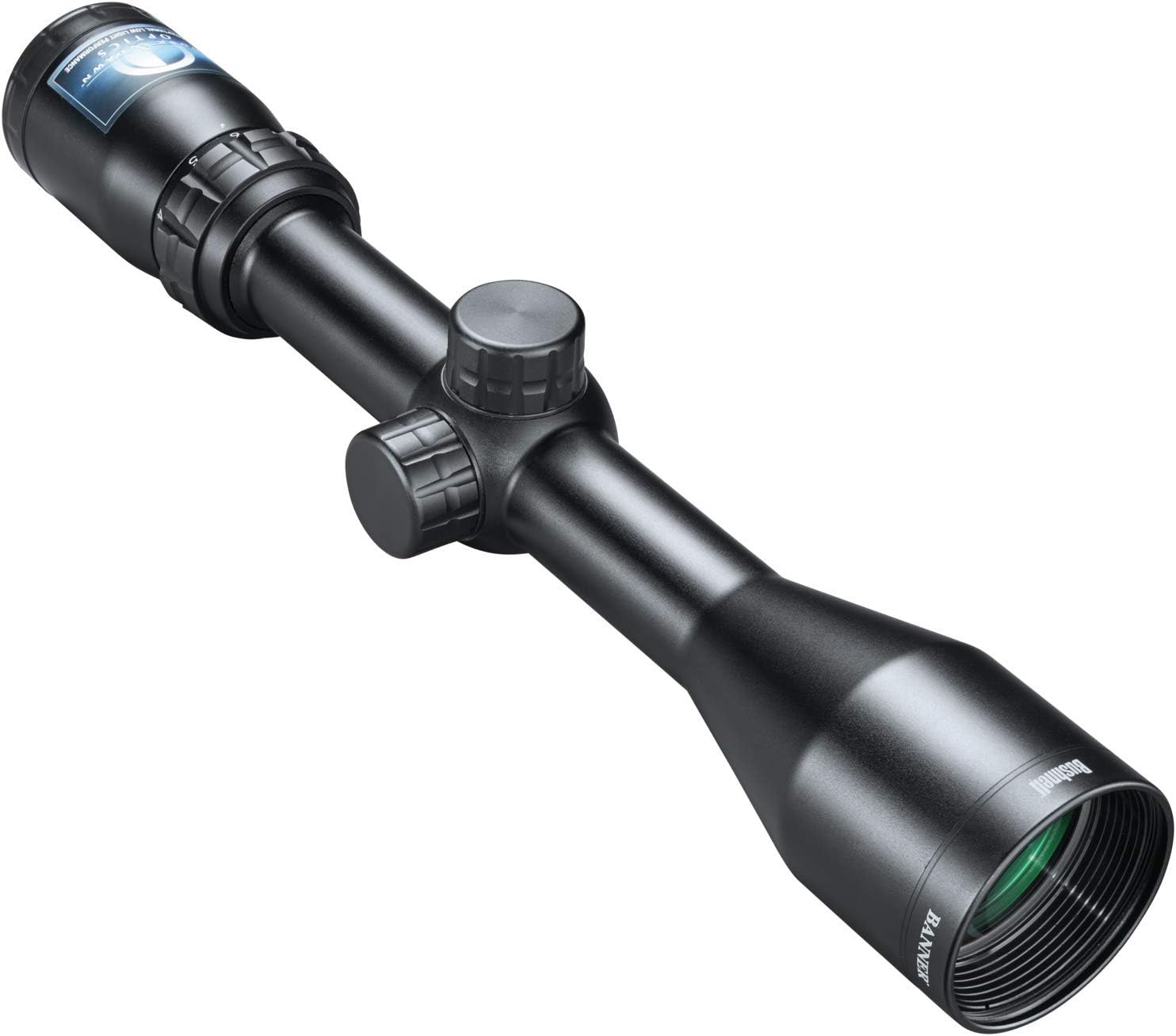
This is one of the first scopes I recommend to beginners because it strikes a perfect balance between affordability and optical performance. I mounted it on a .22 LR bolt-action using standard 1-inch rings and zeroed it in about 12 rounds at 50 yards.
Product Specs:
- Magnification: 3-9x
- Objective Lens: 40mm
- Tube: 1-inch
- Reticle: Multi-X
- Adjustment: 1/4 MOA
Pros:
- Excellent low-light performance
- Easy zeroing
- Lightweight
Cons:
- Basic reticle
- Limited advanced features
The glass clarity surprised me for the price. Edge-to-edge sharpness is decent, though slight softening appears at 9x. I noticed minimal chromatic aberration in bright sunlight, which is impressive at this price point.
Eye relief is forgiving, around 3.3 inches, and the eye box is very beginner-friendly. Even at higher magnification, I could quickly acquire a full sight picture without struggling.
Durability is solid. After 300 rounds of .22 LR, it held zero perfectly. Bushnell’s construction feels more robust than most entry-level scopes.
Turrets are capped and somewhat soft in click feel, but tracking is consistent. I ran a simple box test, and it returned close to zero.
Magnification range is ideal for 50–100 yard shooting. No parallax adjustment, but that’s acceptable for beginners.
Mounting was simple with standard rings. No included accessories, but that’s expected at this price.
From my experience, this scope builds confidence fast. Online forums often praise it as a “starter classic,” especially for hunting and range practice.
Verdict: Best overall beginner scope with reliable performance.
➡️➡️➡️ Explore User Feedback and Current Pricing on Amazon
CVLIFE 3-9x40 (Red/Green Illuminated)
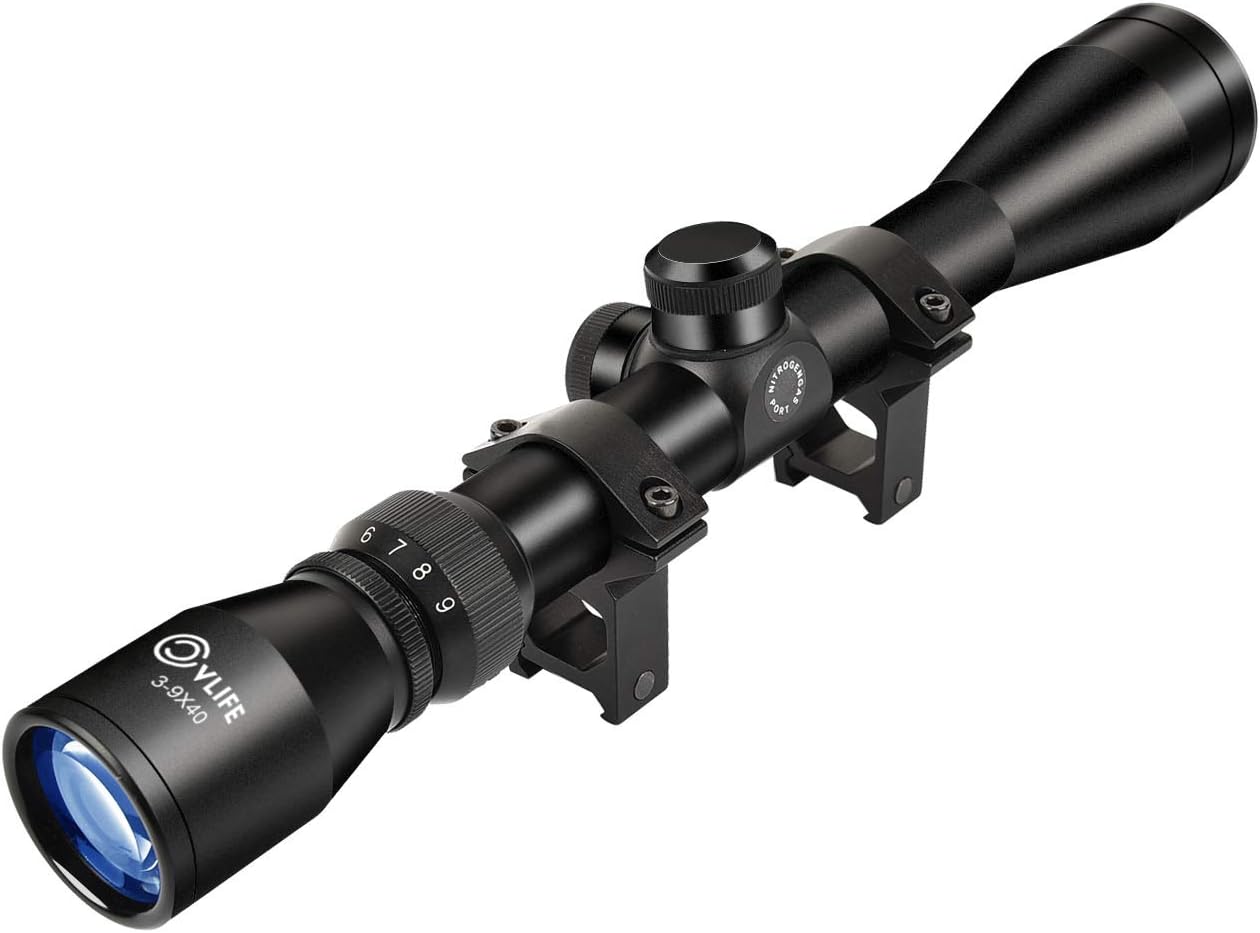
This is one of the cheapest scopes I’ve tested, mounted on a budget AR-15 shooting 55gr 5.56. It’s clearly designed for entry-level users experimenting with optics.
Product Specs:
- Magnification: 3-9x
- Objective: 40mm
- Reticle: Illuminated
- Tube: 1-inch
Pros:
- Extremely affordable
- Includes mounts
- Illuminated reticle
Cons:
- Lower optical clarity
- Turrets feel mushy
Glass clarity is acceptable at low magnification but degrades at 9x. Edge distortion is noticeable, and chromatic aberration appears in bright conditions.
Eye relief is shorter than premium scopes, and the eye box is less forgiving. Beginners may need more time to get consistent alignment.
Durability is decent for light use. After 150 rounds, zero held, but I wouldn’t trust it for heavy recoil.
Turrets lack tactile feedback. Adjustments work but feel imprecise, so I recommend minimal dialing.
Magnification works well for short-range shooting. Illumination is useful indoors but weak in sunlight.
Mounting is easy since rings are included. That’s a big plus for first-time users.
My experience: it’s a “training wheels” scope. Reddit users often say it’s “good enough to learn basics.”
Verdict: Best ultra-budget starter for casual shooting.
➡️➡️➡️ Explore User Feedback and Current Pricing on Amazon
Vortex Crossfire II 3-9x40 (Dead-Hold BDC)
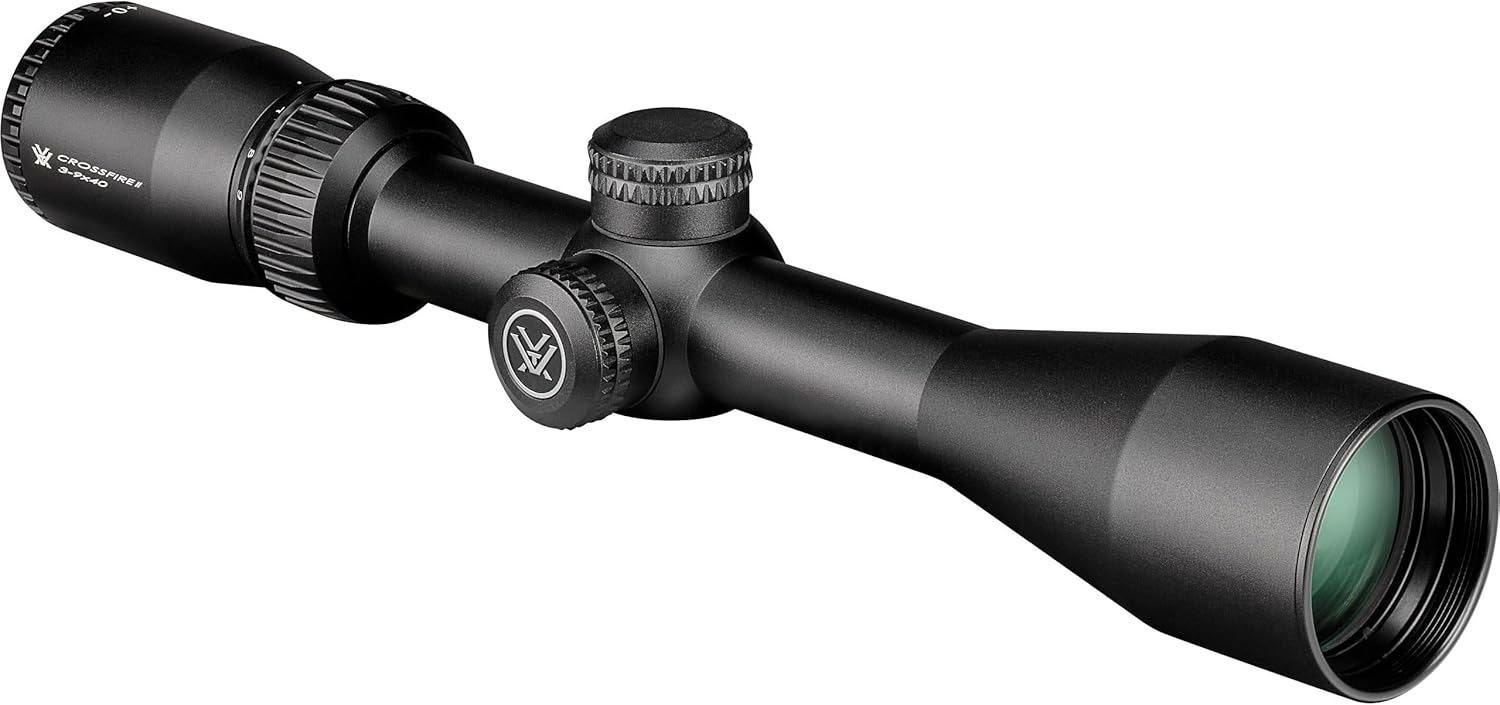
Mounted on my AR-15 with 62gr ammo, this scope zeroed in 10 rounds and stayed consistent after 400 rounds.
Product Specs:
- Magnification: 3-9x
- Objective: 40mm
- Reticle: Dead-Hold BDC
- Tube: 1-inch
Pros:
- Lifetime warranty
- Clear glass
- Reliable tracking
Cons:
- Slightly heavier
- No zero stop
Clarity is excellent for the price. Minimal edge blur and almost no color fringing. It clearly outperforms most budget competitors.
Eye relief is generous (around 3.8 inches), and the eye box is forgiving, even at higher magnification.
Durability is where it shines. It handled hundreds of rounds without losing zero.
Turrets are precise with audible clicks. My box test showed very accurate tracking.
Magnification range is perfect for beginner target shooting. Fixed parallax is fine for under 200 yards.
Mounting is straightforward with standard rings.
Personally, this is my go-to recommendation. Online communities consistently praise its reliability.
Verdict: Best value scope with premium-level reliability.
➡️➡️➡️ Explore User Feedback and Current Pricing on Amazon
Simmons .22 Mag 3-9x32 Rimfire
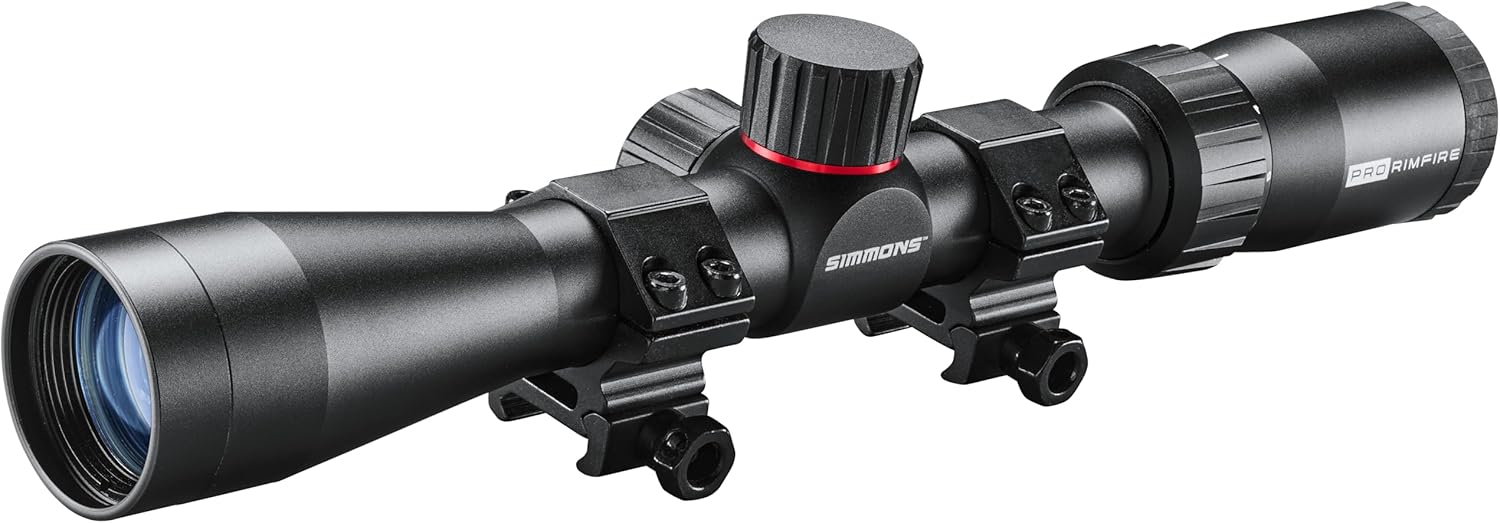
Designed for rimfire rifles, I tested this on a .22 LR at 50–75 yards.
Product Specs:
- Magnification: 3-9x
- Objective: 32mm
- Reticle: Truplex
Pros:
- Affordable
- Lightweight
- Rimfire-optimized
Cons:
- Limited brightness
- Basic adjustments
Clarity is decent but not exceptional. Best performance is at 3–6x.
Eye relief is comfortable, though the eye box tightens at 9x.
Durability is adequate for rimfire use. It held zero after 250 rounds.
Turrets are simple but functional.
Magnification suits short-range shooting perfectly.
Mounting is easy with included rings.
My experience: excellent for training. Forums often recommend it for beginners.
Verdict: Best for rimfire beginners.
➡️➡️➡️ Explore User Feedback and Current Pricing on Amazon
UTG 3-9x32 BugBuster AO
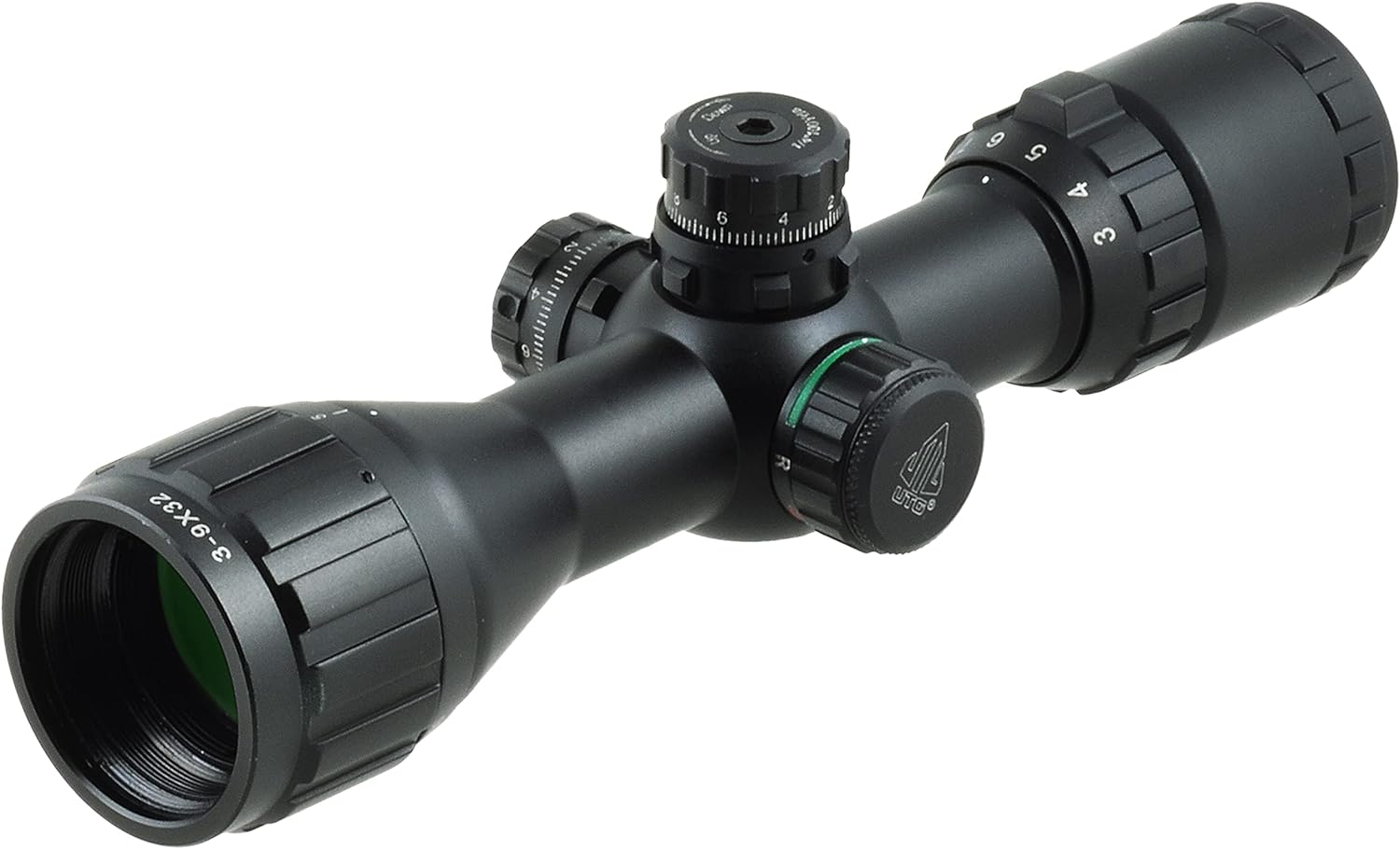
I mounted this on a compact air rifle and tested from 10 to 100 yards.
Product Specs:
- Magnification: 3-9x
- Objective: 32mm
- Parallax: Adjustable
Pros:
- Adjustable parallax
- Compact
- Durable
Cons:
- Smaller field of view
- Heavier than expected
Glass clarity is solid for the size. Slight edge blur but acceptable.
Eye relief is shorter, but eye box is manageable.
Durability is impressive. It handled rough use and held zero.
Turrets are tactile and reliable.
Parallax adjustment is a huge advantage for precision training.
Mounting is easy with included accessories.
My experience: great for precision practice. Users online love its versatility.
Verdict: Best compact precision trainer.
➡️➡️➡️ Explore User Feedback and Current Pricing on Amazon
Athlon Optics Neos 6-18x44
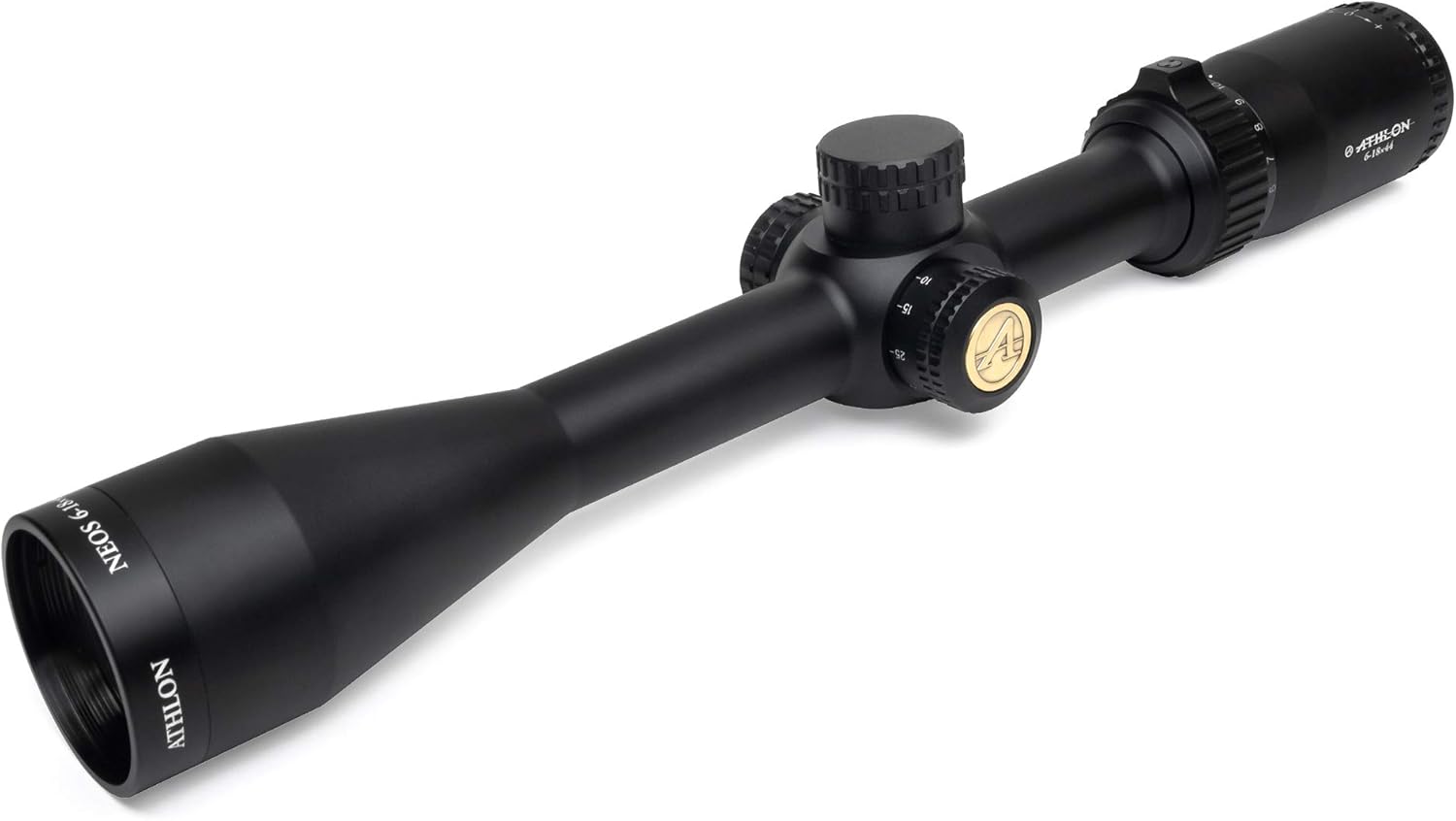
Mounted on a .308 bolt-action with 168gr ammo, I tested from 100 to 300 yards.
Product Specs:
- Magnification: 6-18x
- Objective: 44mm
- Reticle: BDC
Pros:
- Higher magnification
- Good clarity
- Affordable
Cons:
- Narrow eye box at high zoom
- Heavier
Clarity is strong at mid magnification. Slight distortion at 18x.
Eye relief is decent but requires careful positioning.
Durability is solid. It held zero after 200 rounds.
Turrets are accurate but not premium.
Magnification is excellent for learning long-range basics.
Mounting requires proper rings due to size.
My experience: great stepping stone into long-range shooting. Forums highlight its value.
Verdict: Best budget long-range starter.
➡️➡️➡️ Explore User Feedback and Current Pricing on Amazon
How to Choose the Right Scope for This Pistol
When selecting your first scope, especially for target shooting, I always recommend focusing on simplicity and reliability over advanced features. Beginners benefit most from optics that are easy to mount, easy to zero, and forgiving to use.
First, consider magnification. A 3-9x scope is ideal for most beginners because it covers close to mid-range shooting. Higher magnification like 6-18x can be useful later, but it narrows the field of view and makes target acquisition harder.
Second, pay attention to the reticle. A simple duplex or BDC reticle is best when starting out. Complex reticles can overwhelm new shooters and slow down learning.
Third, evaluate eye relief and eye box. A forgiving eye box allows you to quickly get a full sight picture, which is critical when developing consistent shooting habits.
Durability also matters. Even budget scopes should hold zero after a few hundred rounds. I always test this personally because nothing is more frustrating than losing zero.
Turrets should be consistent, even if they’re basic. Beginners don’t need exposed tactical turrets, but they do need reliable adjustments.
Finally, consider warranty and brand reputation. Companies like Vortex stand out because of their lifetime warranties, which adds peace of mind.
FAQs
1. What magnification is best for beginners?
I recommend 3-9x because it balances versatility and ease of use.
2. Do I need an expensive scope for my first rifle?
No, many budget scopes perform very well for target shooting.
3. Is FFP necessary for beginners?
Not at all. SFP scopes are simpler and easier to learn.
4. How far should I zero my scope?
Start with 50 or 100 yards depending on your rifle.
5. What is the most important feature?
Consistency—your scope must hold zero and track reliably.
Conclusion
Finding the Best Scope For First Rifle doesn’t require a big budget—just the right balance of clarity, durability, and usability. From my experience, scopes like the Vortex Crossfire II and Bushnell Banner deliver the best overall performance for beginners, while ultra-budget options like CVLIFE help you get started with minimal investment. If you’re serious about improving your shooting skills, choosing the Best Scope For First Rifle will accelerate your progress and make every range session more rewarding.